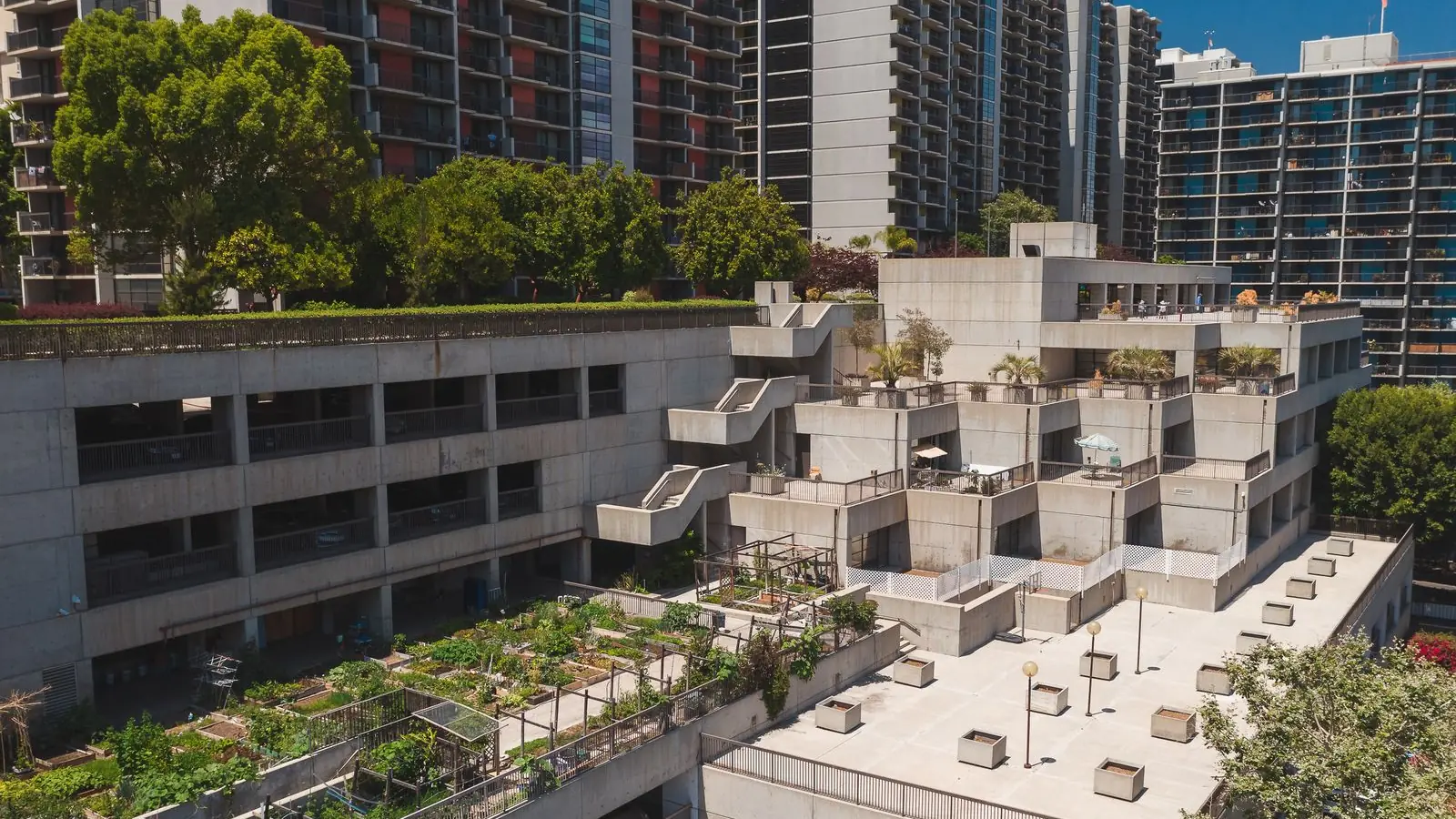
These are illustrative examples of how urban farms serve different settings, based on publicly documented projects around the country - not case studies this site operated or claims credit for. They are grouped by the kind of institution each format tends to serve.
Schools
School gardens typically combine a teaching function (science, nutrition, math tied to growing cycles) with a smaller amount of produce for cafeteria use or take-home programs. Farm-to-school programs, which connect local farms and school food service, are a related and distinct model - see school garden programs for more detail on planning one. USDA's 2023 Farm to School Census, covering the 2022-23 school year, counted 74,433 schools serving locally sourced food, and found that about 15 percent of responding school food authorities ran at least one edible garden alongside their farm-to-school purchasing.
Hospitals and healthcare campuses
Hospital gardens generally serve one of two purposes: a therapeutic or healing-garden space for patients and staff, or a working garden supplying a small amount of produce to hospital food service or a patient food-access program. The latter overlaps with "food as medicine" programs; see food as medicine for the evidence behind produce-prescription models specifically.
Corporate and institutional campuses
Workplace gardens are usually framed around employee wellness and engagement rather than food production at scale - a relatively small plot, often volunteer-maintained with light professional support, used for team activities as much as for harvest.
Housing developments
Community gardens attached to housing developments function as shared amenity space, comparable to a courtyard or playground, with produce typically going directly to resident households rather than being sold. See how to start a community garden for the planning questions specific to a resident-run growing space.
A federal recognition program that spans all four settings
USDA reopened its People's Garden Initiative in May 2022 and, from September 2022, opened registration to outside sites, including school gardens, community gardens and small-scale urban farms. A site that registers and meets USDA's stated criteria, benefiting its community, working collaboratively and using conservation practices, appears on USDA's People's Garden map and can display a People's Garden sign; the registration process and criteria are set by USDA and may be updated, so check USDA's own pages before assuming a given site still qualifies.
Choosing a model
These settings differ mainly in who benefits (students, patients, employees, residents) and who maintains the site (institutional staff, a contracted service, or volunteers) - see Farming as a Service for how a managed, contracted model compares to self-run options across any of these settings. Funding eligibility tracks the model too: USDA's Office of Urban Agriculture and Innovative Production, created under the 2018 Farm Bill, funds Planning and Implementation Project grants for sites with a stated community, education or food-access purpose, which in practice tends to favor school, hospital and community-garden projects over a purely employee-amenity workplace garden. See urban farm funding for the grant tracks and recent funding amounts.