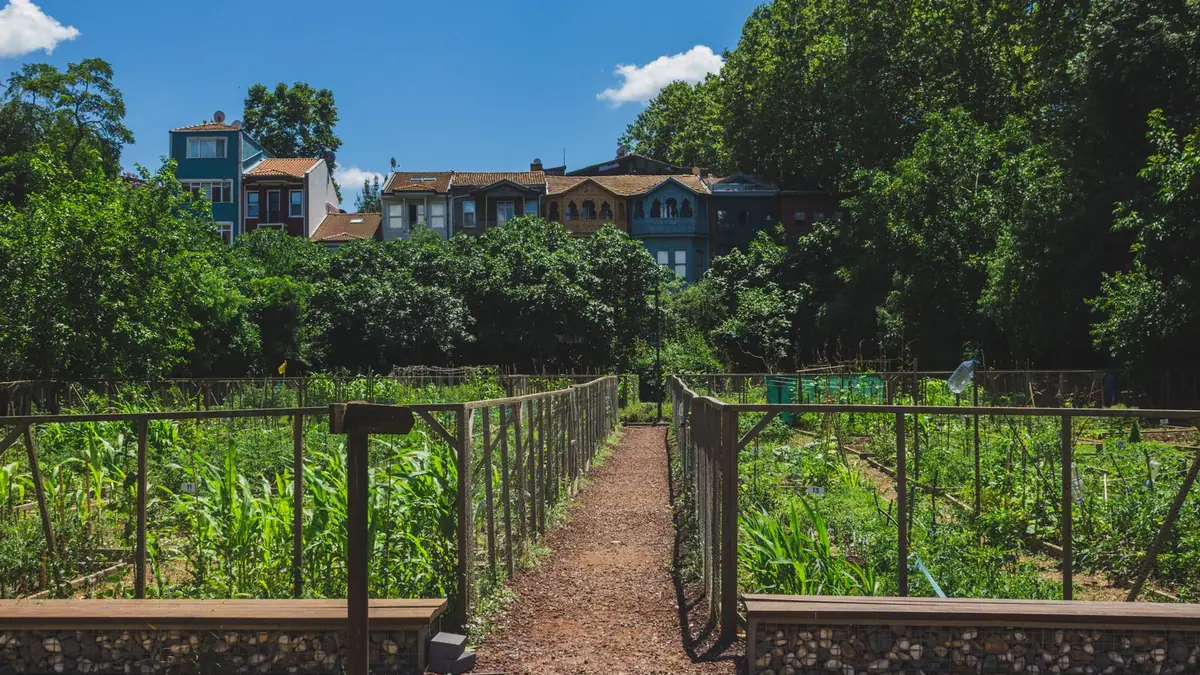
An urban farm network connects individual growing sites - community gardens, school plots, commercial urban farms - so they can share resources, coordinate programming, and make the case for policy or funding together rather than site by site. This page explains how these networks generally work in U.S. cities.
What a network actually does
Depending on the organization running it, a network might provide: a shared map or directory of growing sites so residents can find one nearby; bulk purchasing of seeds, soil or tools at better prices than any single site could get alone; shared equipment (tillers, compost turners) that individual gardens could not justify owning; and a single point of contact for city agencies, funders or researchers who want to reach many sites at once rather than negotiating with each separately.
A long-running national example
The American Community Gardening Association, founded in 1979 out of a national conference held in Chicago the year before, is one of the oldest organizations coordinating community gardening networks across the United States and Canada. By its own account, it now has more than 1,000 individual members and 252 organizational members, a scale that illustrates how large a coordinating network can grow over four and a half decades without ever operating a garden itself; ACGA mainly connects and supports local gardening groups rather than running sites directly.
Why cities support them
From a city's perspective, a network is easier to work with than dozens of unconnected gardens - it can route grant applications, zoning questions, or composting programs through one organization rather than many. Cincinnati's own urban agriculture zoning ordinance, which took effect in September 2019 after roughly two years of development, is an example of a policy change driven partly by coordinated advocacy from the city's urban agriculture community rather than a single garden's request; it clarified rules for community gardens, backyard gardens, small-scale farming, composting and indoor growing operations citywide. Cincinnati's Food Policy Council is itself an example of a structure tracked nationally: the Johns Hopkins Center for a Livable Future's Food Policy Networks project counted 283 active food policy councils across the country as of a survey published around 2020, with roughly two-thirds operating at the city or county level rather than statewide, and a later Hopkins-run census sent its survey to 358 councils and state networks.
Questions to ask before joining a network
- What does membership actually provide - bulk purchasing, a map listing, grant-writing support, insurance?
- Is there a cost, and what does it cover?
- Who owns the land your site sits on, and does network membership change that in any way?
- How is the network itself funded, and does that funding come with any strings attached to member sites?
Finding a network near you
Network structures vary by city - some are run by a single nonprofit, others by a city office, others informally through a shared mailing list. A city's parks department, food policy council or local extension office is usually the fastest way to find what exists locally. For a look at specific project types a network might connect, see urban farm examples; for Cincinnati specifically, see urban farming in Cincinnati.