This page covers Cincinnati's broader urban agriculture landscape - organizations, gardens and city programs - rather than naming a staff or volunteer "team." Urban Farming Insights has no editorial team members whose names or photos appear publicly, consistent with this site's general policy of not publishing private individuals' details (see about this guide).
City policy: the 2019 zoning ordinance
Cincinnati's urban agriculture zoning ordinance took effect in September 2019 after roughly two years of development with the city's Food Policy Council. It clarified rules for community gardens, backyard gardens, small-scale farming and composting, made it easier for residents and businesses to establish gardens and urban farms, and extended coverage to indoor farming and aquaculture. Community gardens are permitted by right (subject to standards) across zoning districts under the updated code. Before this update, "farming" uses were largely restricted to manufacturing-agriculture zones and limited single-family district allowances.
City funding
The City of Cincinnati's Office of Environment and Sustainability runs an Urban Agriculture grant program for production and growing sites, as well as aggregated distribution ("food hub") sites; eligible applicants are nonprofit organizations or for-profit businesses, not individuals, and funding rounds and criteria are published on the city's website each cycle. Readers interested in applying should check the current cycle's criteria directly rather than relying on a prior year's terms, since requirements and deadlines change.
Community gardens on city land
The city's broader urban-agriculture effort has also focused on vacant and city-owned parcels as potential garden or farm sites, part of a wider push to put underused land to productive use. The exact number of parcels in active use changes over time and is best checked against current city data rather than older published figures.
Food access at Cincinnati-area markets
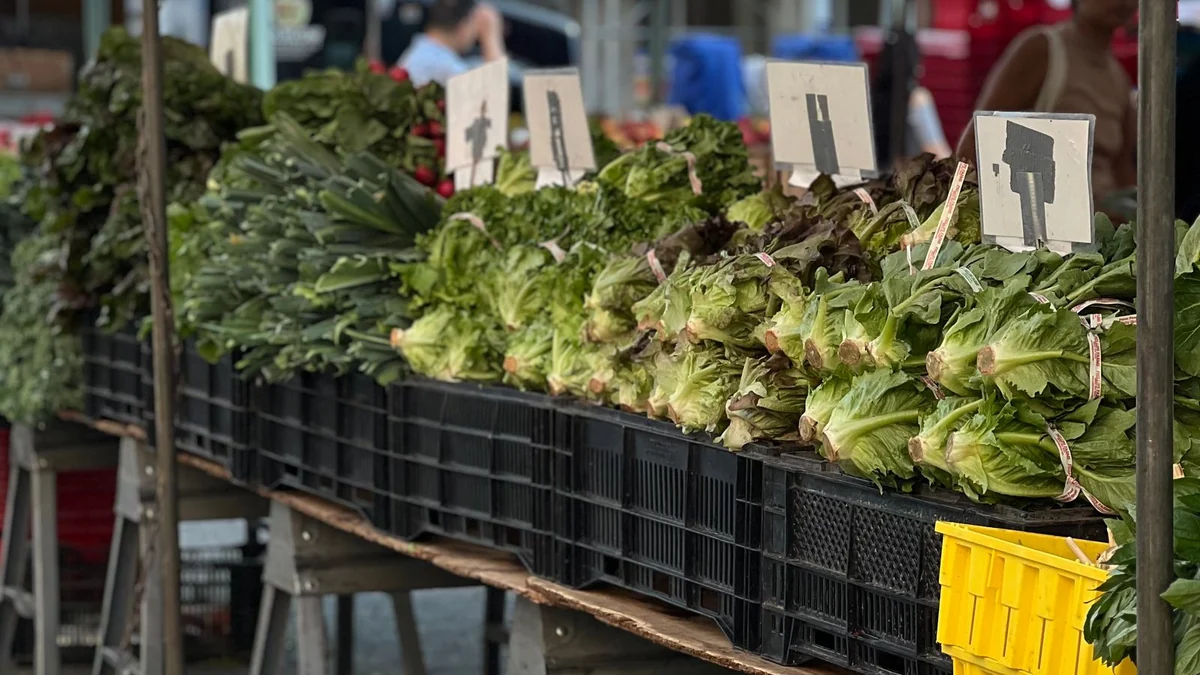
Produce Perks Midwest, a nonprofit founded in 2017, administers Ohio's SNAP produce-matching program, letting shoppers exchange their Ohio Direction (SNAP/EBT) card for tokens at a participating market's customer booth that can then be spent on fresh fruit and vegetables, seeds or vegetable plants. The program has operated at Cincinnati-area farmers markets alongside other Ohio locations, though match amounts and which specific markets participate have shifted over time, including after a federal grant to the program was terminated early in 2025, according to Signal Cleveland's reporting on the Cleveland-area rollout. Confirm current participation and match terms directly with a specific market rather than assuming a past visit's terms still apply.
Where to look for current Cincinnati programs
- City of Cincinnati Office of Environment and Sustainability - grants and the urban agriculture zoning code.
- The city's Food Policy Council - policy coordination across food access and urban agriculture.
- Local organizations such as Green Umbrella, a regional sustainability alliance that has supported Cincinnati-area urban agriculture coordination.
For produce access specifically, see Cincinnati farmers markets and local food; for the policy side in more detail, see urban agriculture policy and zoning in Cincinnati.