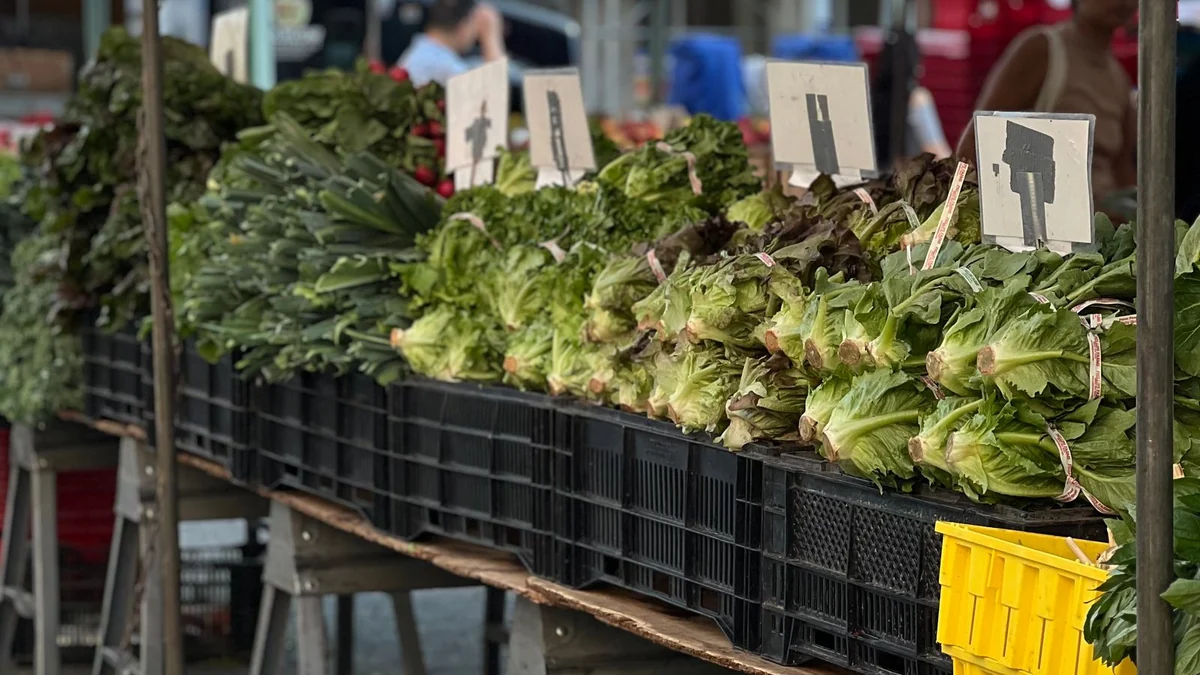
Cincinnati's best-known source of local food is Findlay Market, the city's historic public market and one of the oldest continuously operating markets of its kind in the country. This page is a practical guide to finding local food in Cincinnati, starting there.
Findlay Market: a brief history
Findlay Market was founded in 1852 on land from the estate of General James Findlay and his wife Jane Irwin Findlay, though construction delays pushed its actual opening to 1855. It was built with a cast- and wrought-iron frame - an early use of that technology in the United States - and is the last of Cincinnati's nine historic public markets still standing; the others closed between the late 19th century and 1968 as supermarkets took over. The building was listed on the National Register of Historic Places in 1972 and underwent major renovations in 1973-74 and again in 2002-03.
What to expect today
Findlay Market combines year-round indoor merchants - around 60 full-time vendors selling meat, produce, baked goods and prepared foods - with an outdoor farmers market and additional vendors on Saturdays from March through December. The market also houses a food-business incubator and storefront accelerator program supporting new local food businesses. Because outdoor vendor presence and hours shift seasonally, checking the market's current schedule before visiting is worth doing rather than assuming it matches a prior visit.
That incubator, Findlay Kitchen, held its ribbon-cutting in March 2016 as an 8,000-square-foot shared-use commercial kitchen space at 1719 Elm Street, built with separate industrial kitchen stations that food entrepreneurs can rent rather than having to build out their own licensed kitchen. According to a 2026 report by local news outlet WCPO marking the kitchen's tenth anniversary, the space now offers 14 stations for chefs and bakers. It functions as a lower-cost entry point for a grower or cook moving from a farm stand toward a packaged, licensed food product, the same kind of transition covered in from urban farm to local food brand.
Stretching a grocery budget at Ohio farmers markets
Produce Perks Midwest, a nonprofit created in 2017, runs Ohio's SNAP produce-matching program at participating farmers markets statewide, including Findlay Market. Shoppers swap their Ohio Direction (SNAP/EBT) card for matching tokens at a market's customer booth, and those tokens can be spent on whole fresh fruits and vegetables, seeds or vegetable plants at any participating market. Match amounts and the list of participating markets have changed over time, including after a federal grant to the program was terminated early in 2025 according to Signal Cleveland's reporting, so a shopper should confirm current terms at the market booth rather than assuming a prior visit's match rate still applies.
Other ways to find local food in Cincinnati
- Neighborhood farmers markets, which run seasonally across different Cincinnati neighborhoods, typically smaller than Findlay but closer to home for many residents.
- Community-supported agriculture (CSA) shares from regional farms, which deliver a weekly box of produce directly to subscribers.
- Urban farm stands connected to the gardens and growing sites covered elsewhere on this site - see urban farm examples.
Before you go
Always check a market's current hours and vendor list directly rather than relying on an old listing, since vendors and schedules change seasonally and year to year.